Category: Personal

  • Thor’s doggie door

    Thor’s doggie door

    I include these little projects, because the problem solving involved (identifying a need, experimenting with a solution, working within constraints) keeps instincts sharp.

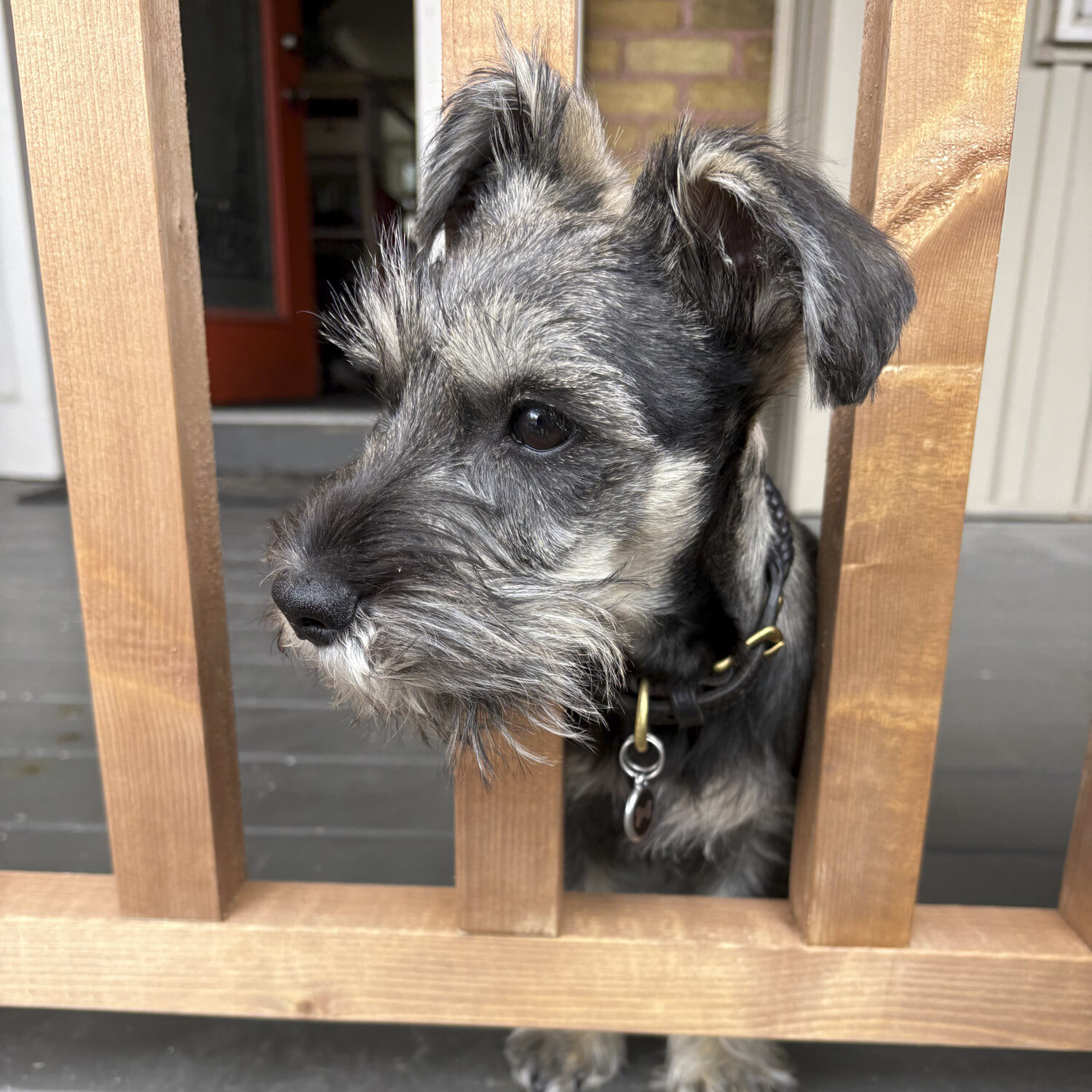
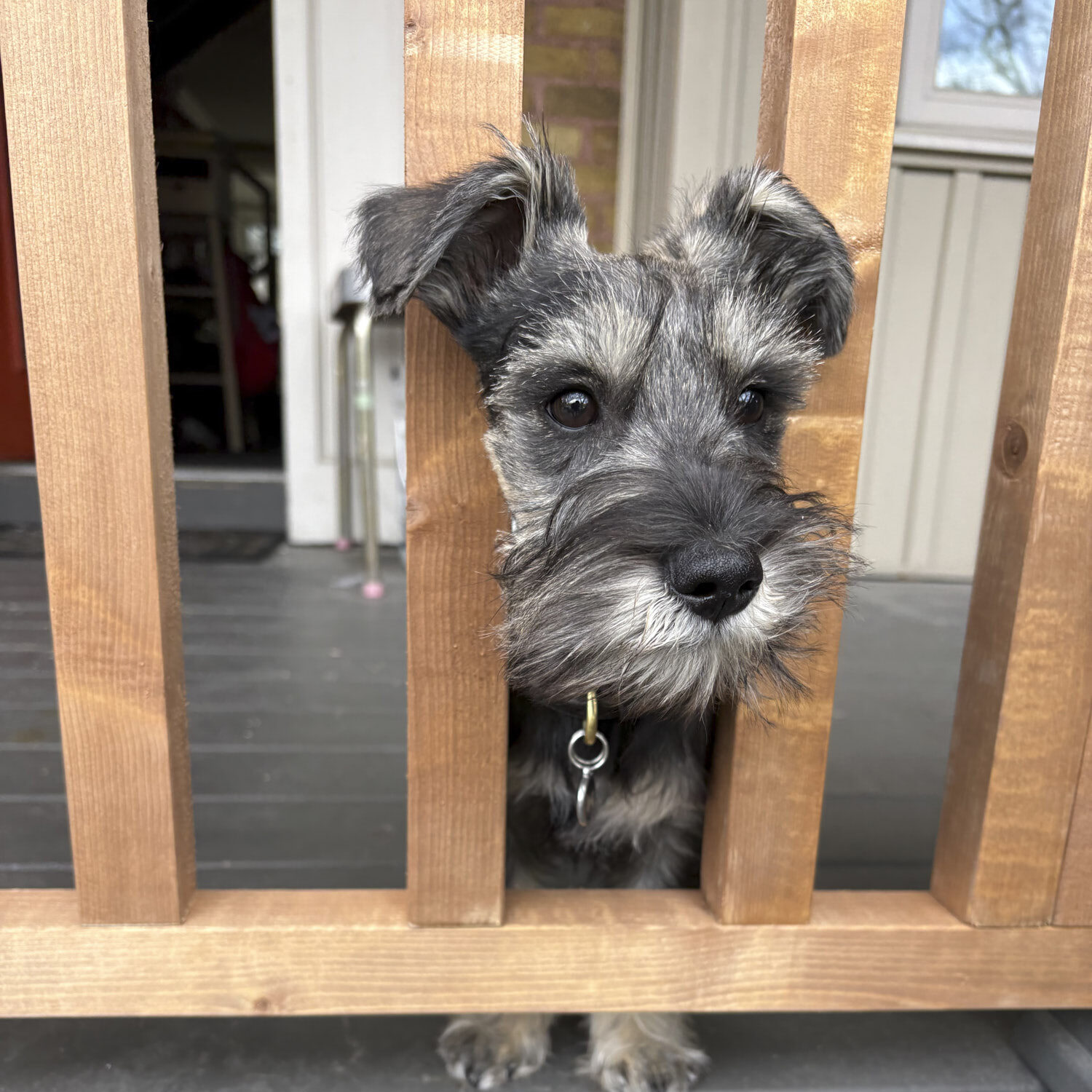
    Imagine you have kids and a new puppy. Our kids walk to and from school. They open the front door to get in and out of their house on the way to and from school. We had to chase our puppy, Thor, down the street a handful of times when he sneaked out between the kids legs thru the open door.
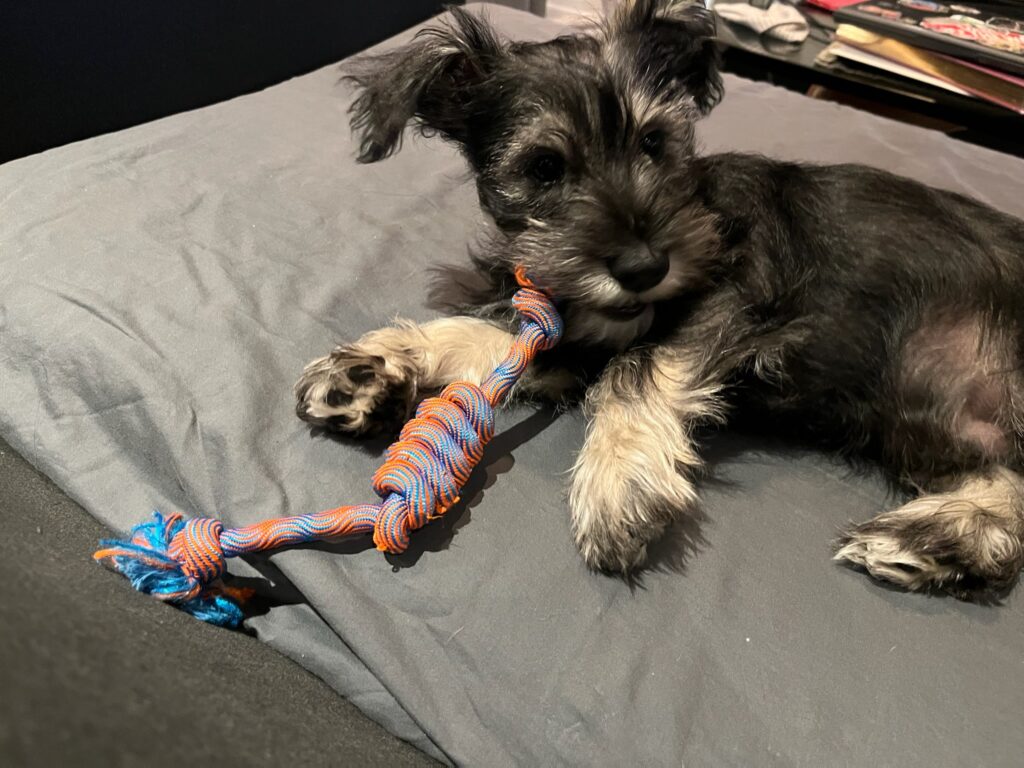
    So a doggie door on the front porch.

    Constraints:

    • No new power tools- just my jigsaw, drill, clamps.
    • Less than a hundred bucks if possible for all materials and consumables
    • Will survive outdoors in Canada for more than a season,
    • Looks like it fits with the wooden railings (brand consistency?)
    • Reasonably robust, but relatively lightweight.
    • Can be made in a few rain-free April hours.

    Design:
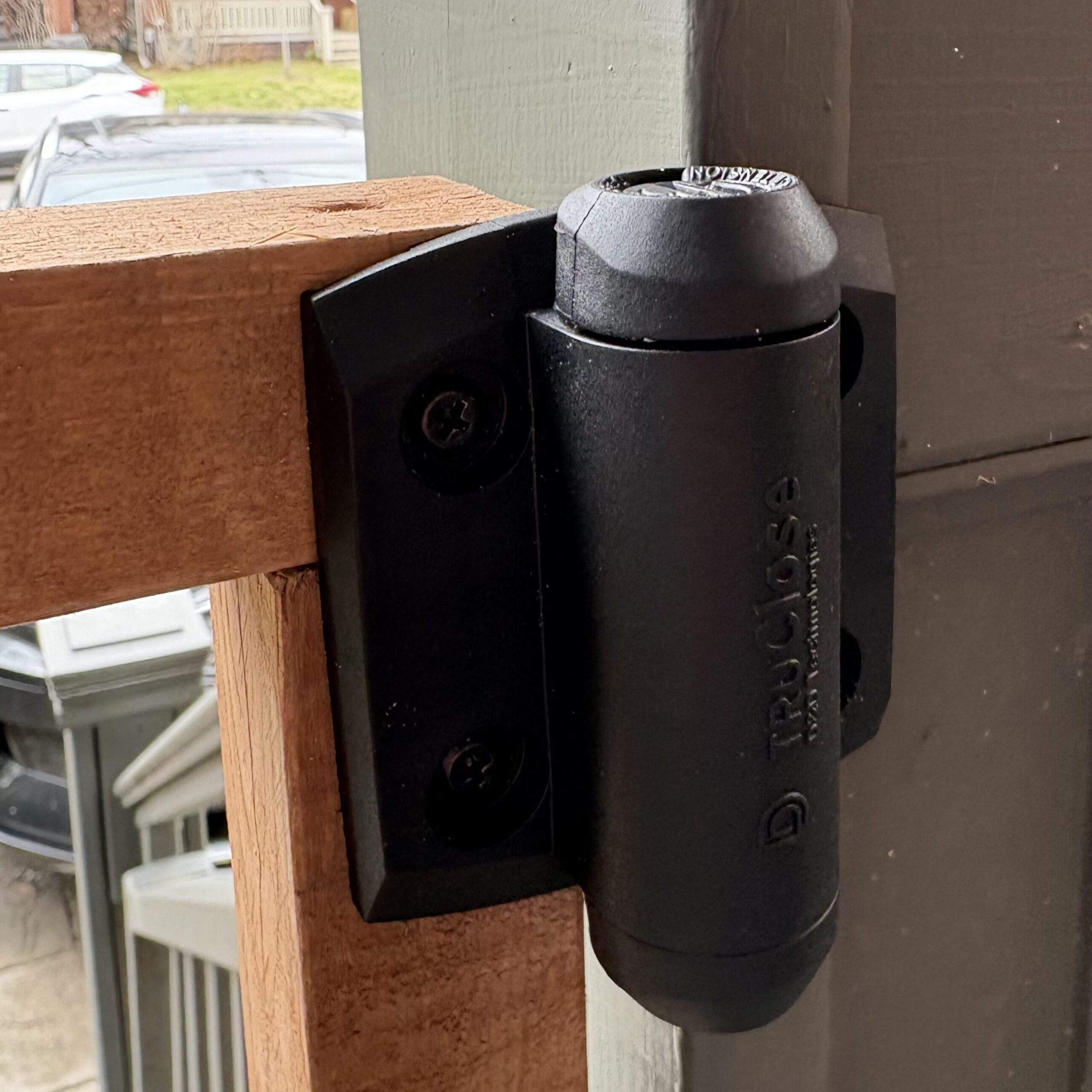
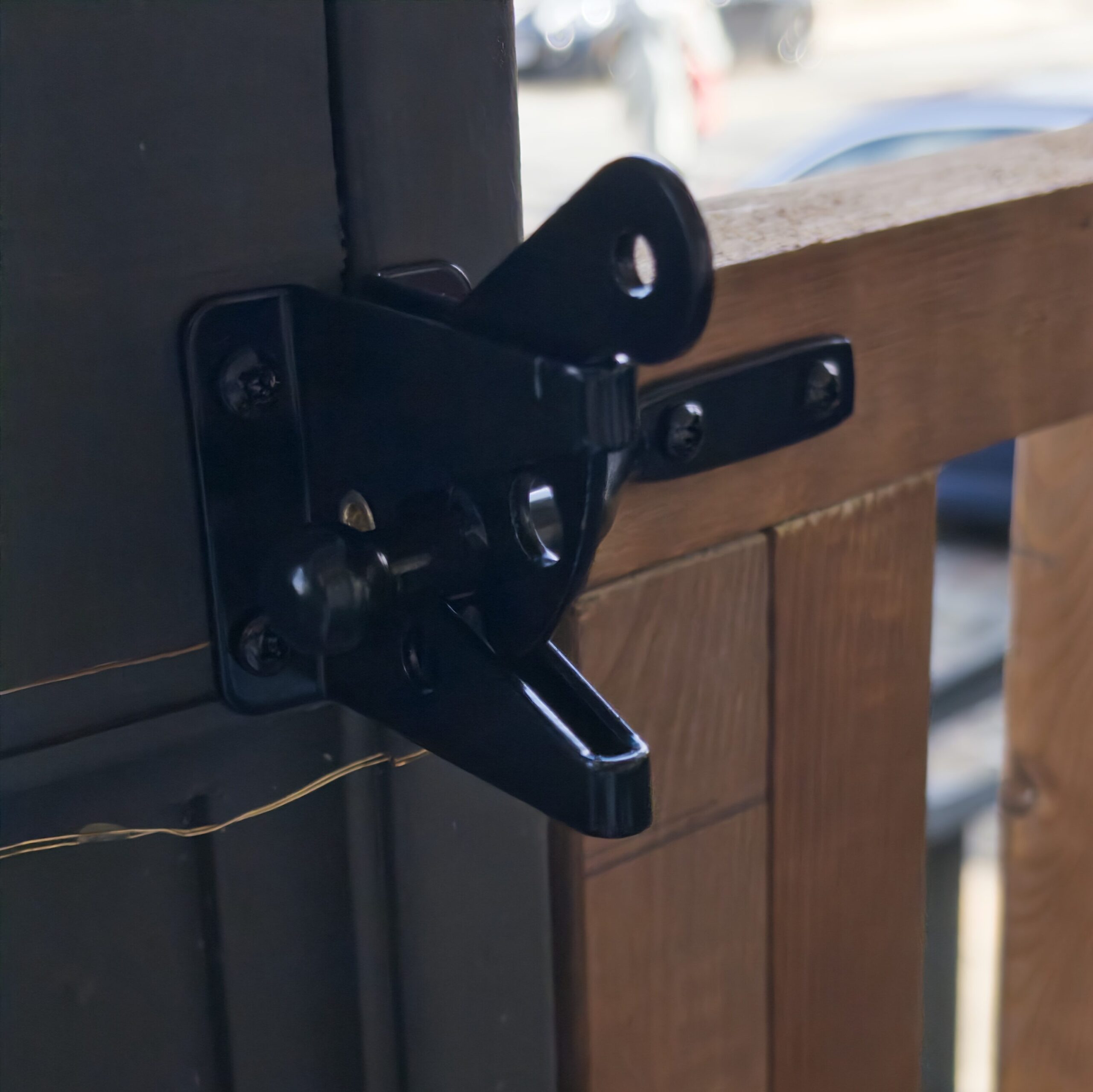
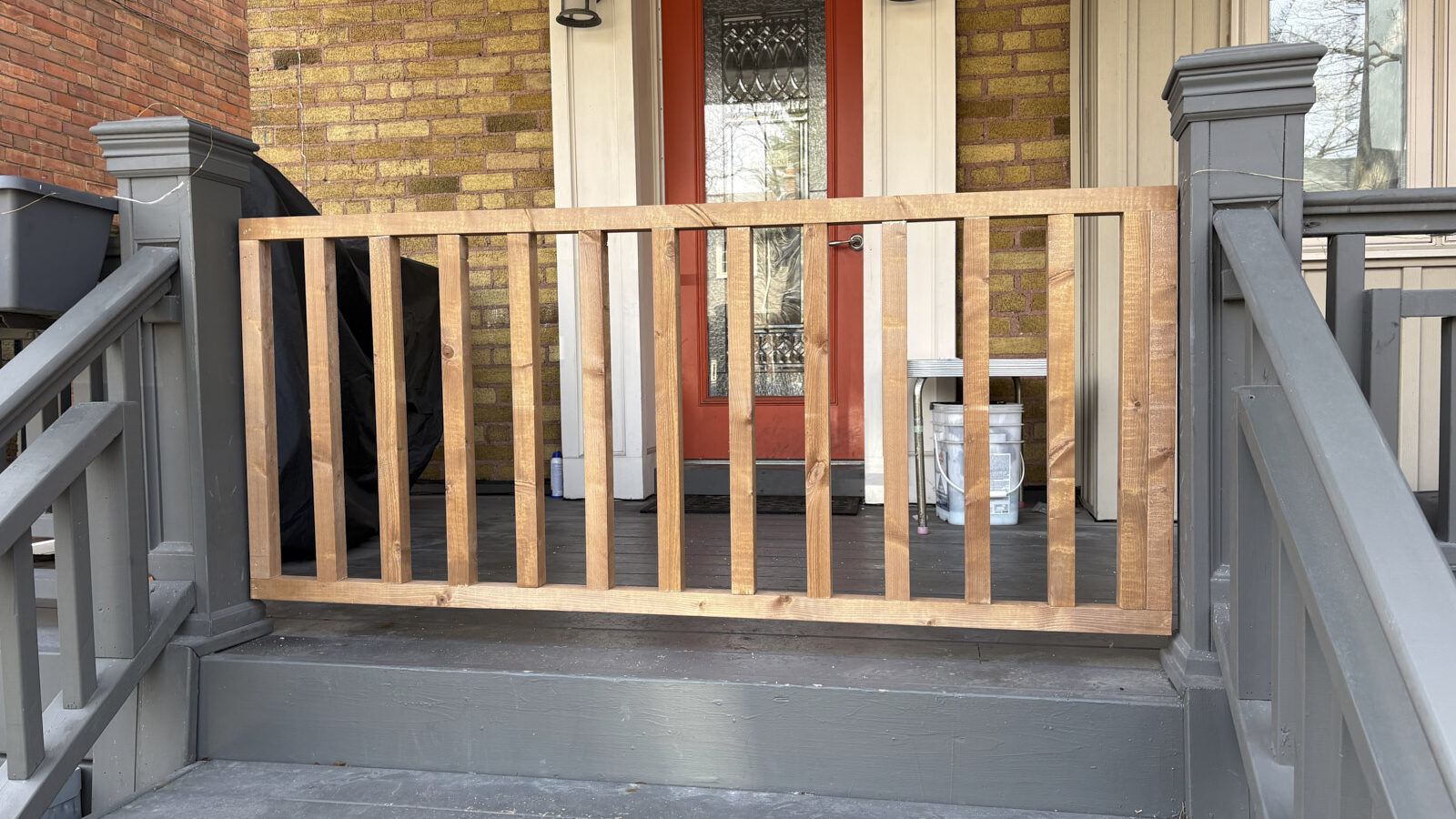
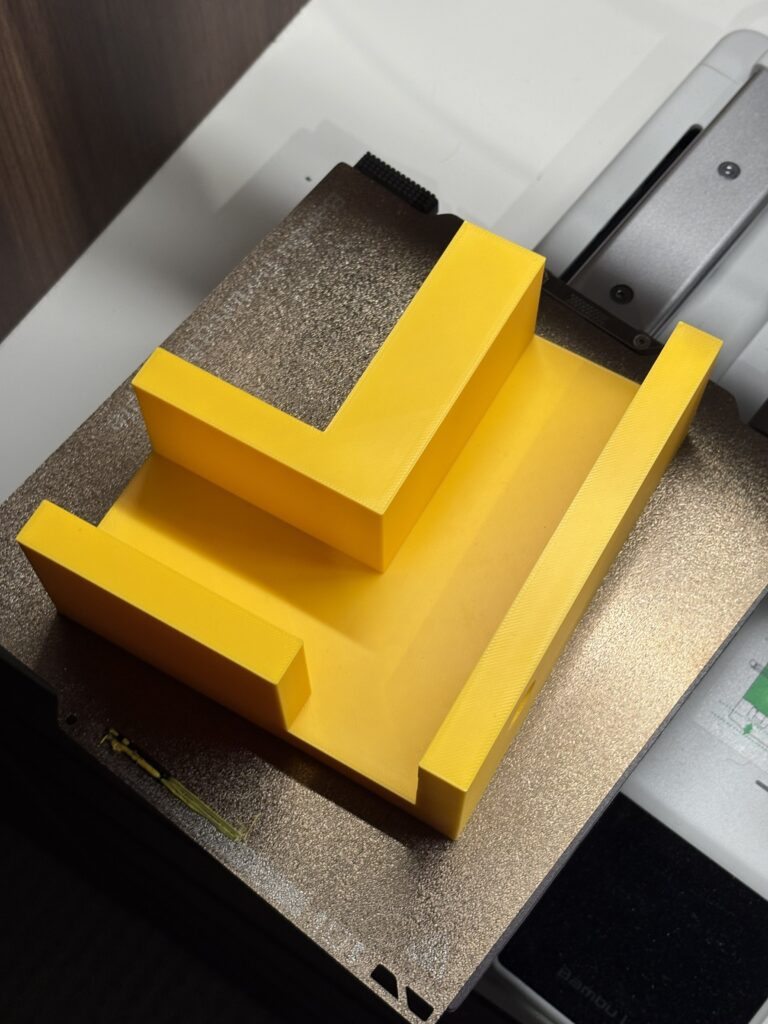
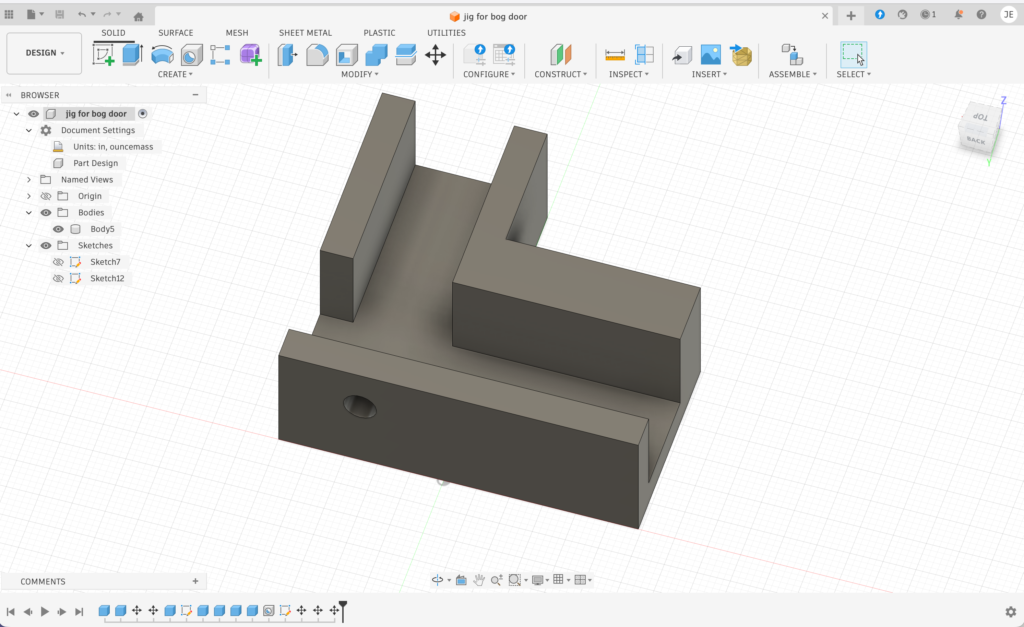
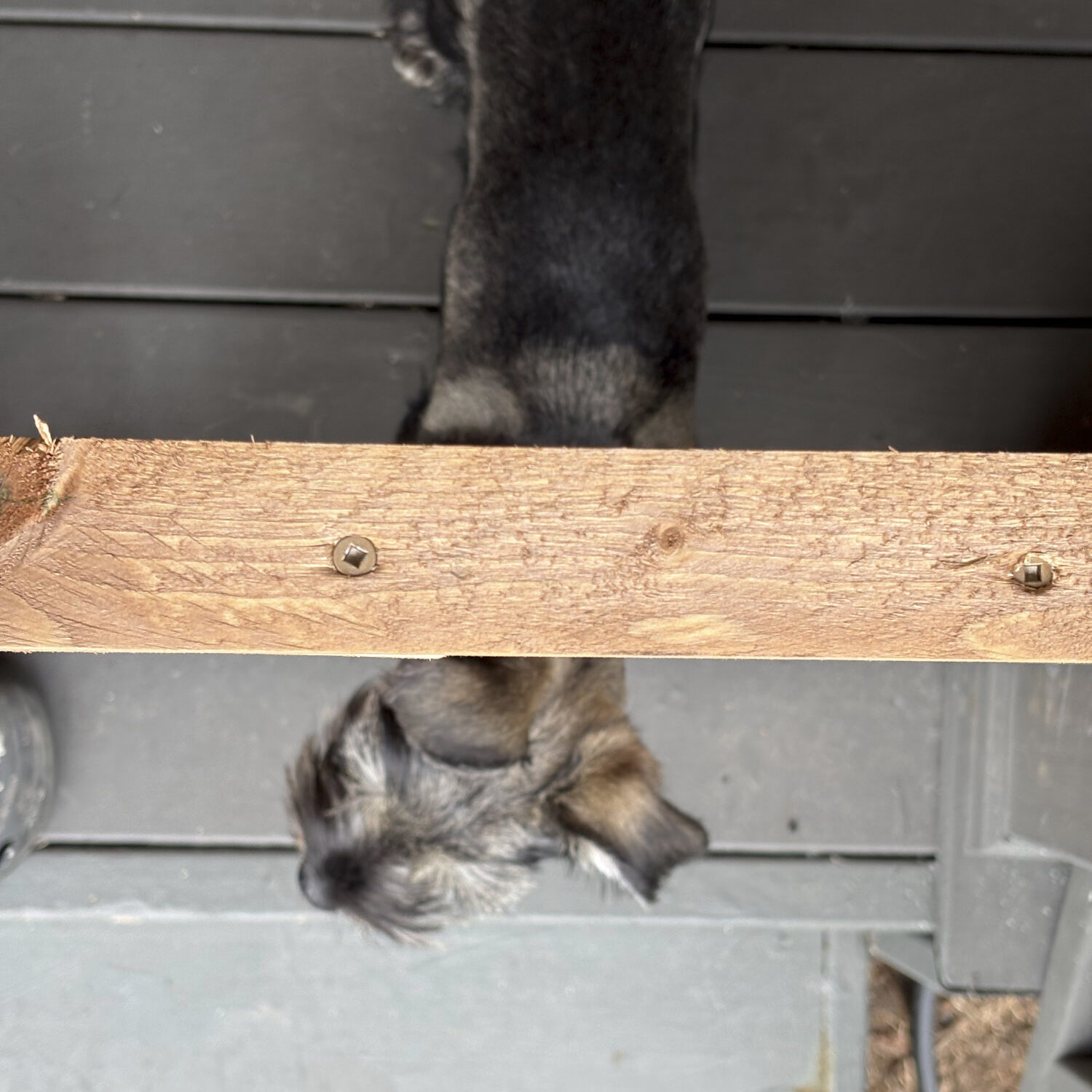
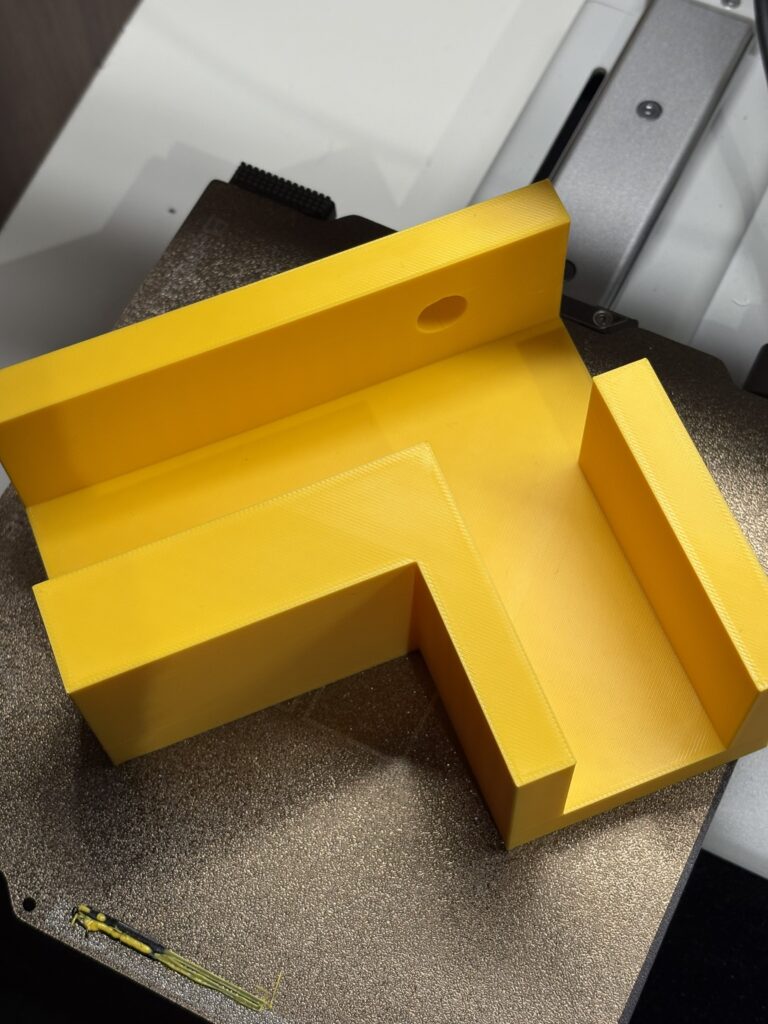
    Construction is kind of a basic ladder-like shape matching the existing railing in terms of a riser spacing for 5” center to center. The door is 24” high so as to minimize waste on a 2x2x8” plank, but still match the overall railing dimensions. The frame is made from 2×2 pressure treated lumber to keep the weight down ( the railing on our porch combines 2×4 and 2×2, but the door must span 5’ and only needs to resist a 20lb dog. Weather resistant spring-return hinges and a simple catch ensure the door closes and locks when the kids forget to. To keep framing square and spacing correct,a 3-d printed jig helped to space and square the wood for fastening.

    Materials and cost

    • ~40 CAD for 5 planks of 2x2x8 pressure treated lumber.
    • ~60 CADfor a pair of weather resistant spring return gate hinges (rated for 66 lbs, so overkill but they look real pretty)
    • ~4 CAD for a painted steel catch, the kind you see on dog doors in dog parks everywhere.
    Consumables:

    ~40 CAD for extra long (6”) jigsaw blades for cutting the lumber. I could have rented a chop saw for $40 but wanted to use what I had.

    ~3 CAD to 3d print a jig from PVA

    With taxes this came to $160 -could probably have gotten it done for under 80 if I used $10 (30lb) painted steel spring hinges in place or the fancy ones

    Now, is it puppy proof?
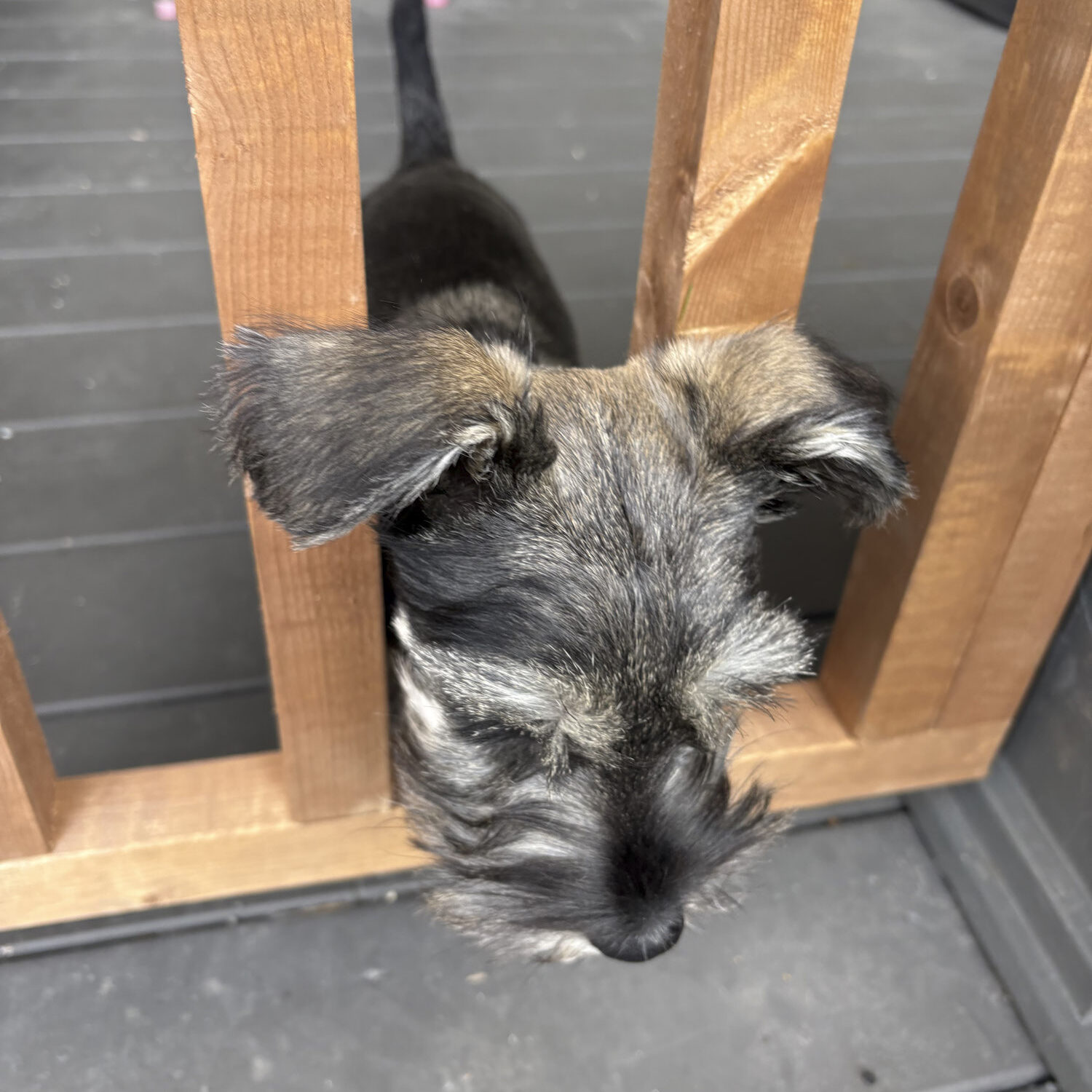
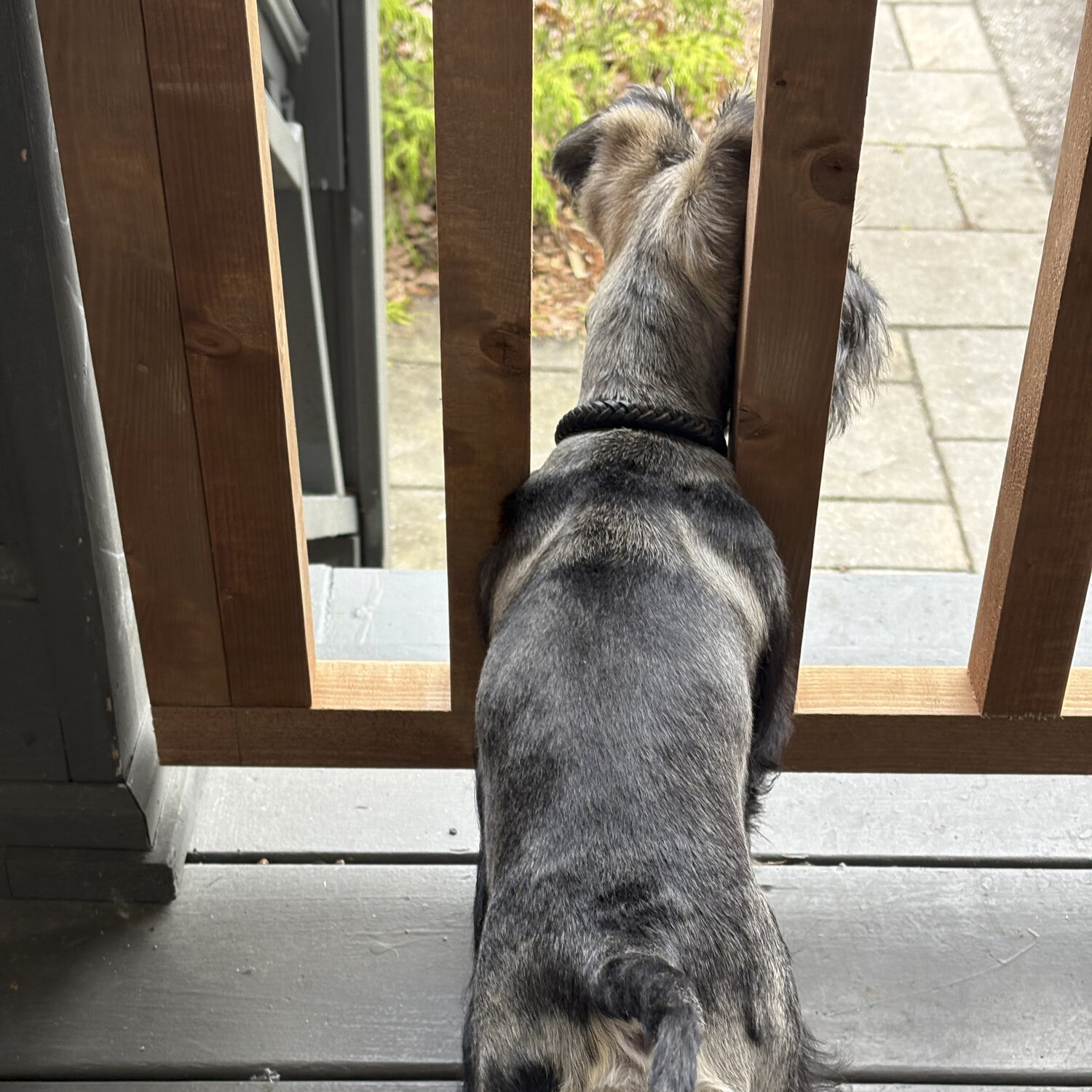
    Good enough – First time he saw it, Thor tried to squirm thru only to get stuck between the spacers. Second time he didn’t even try, after the experience of us extracting him. It slowed him down enough so no street chasing required.

  • A Procedure

    A Procedure

    A set of daily observations from a procedure in Feb 2024.

  • Figure studies

    Figure studies

    Over the years I’ve been fascinated in exploring composition and figure in a wide space that tends to martinalize the figure itself. The convention of figure studies is all about a kind of central position where the gaze centers on the figure. I’m more interested in what the props say, and how they work formally.

  • Quick Release Urban Bike Bag For a Moulton

    Quick Release Urban Bike Bag For a Moulton

    Follow thru and experimentation is the only way to design technical projects

    Frame attached bags for city bikes need to solve for technical and practical problems.

    Carried loads should remain undisturbed, even when cornering, hitting bumps, tram tracks, or emergency braking. Cyclists need to be able to quickly detach the bag and its contents off the bike to leave nothing tempting for thieves. Bags should resist weather and abrasion while staying reasonably light.

    As a commuter with errands, I had a few more rerquirements: THe bag should be trim enough to carry into a musuem with a laptop and sketchbook, but with the expansion capactiy to bring groceries or takeout home when Priss texted asking forr bread and milk.

    Why create something new?

    Why not panniers or a basket? Well, neither fit easily to my bike. Panniers have good technical attributes such as center fo gravity and quick release, but poor practicality when carrying bulk items such as our ‘friday sushi’ upright. Panniers also tend to carry quick release harware that can snag on things. Its always better to balance pannier loads by having 2 but this is less convieineint for carrying into buildings. Retrofit baskets tend to work well for carrying but can affect handling if loaded. They still need bags. And why not pbackpacks? Its not a great idea for my back.

    Early Idea, First try

    This was my first bag design, and a with first of everything, somethings just always go wrong.

    Sizing was done by fitting a cardboard maquette, then doing tech drawings. For attachement, I thought the bag could quick secure by hooking under the back platform then anchor to a stap attched to the seat tube. The bag would slip between bars on either side of the platform to provide three points of connection and lateral stabilty. A laptop pocket on the bottom provides additional stability as the laptop and padding provide dimensional support. two standard buckles on either side allowed me to attach a shoulder strap. An expanadble compartment coverted the bag from a laptop bag to a duffel large enough for a full grocery load, bulky takeout, or a weekend trip.

    Tough Traveler in my hometown of schectady did the cutting and sewing of the prototype.

    Fast forawrd a few weeks and a prototype shipped to me.

    First fail:

    Just before fabrication started, I looked to see how close the template came to my cycling shoes when pedalling, by pedalling stationary and photographing the overlap. Turns out that more than 1/2 inch of overhang with the plaform back results in a heel strike. A quick adjustment fixed this and drove the next issue.

    The follow on fail

    IN adjusting the bag shape, there wasn’t enough lateral support from the foam reinforced cordura. The bag would swing wildly by the seatpost with no provocation.

    A solution from unexpected places:

    In experimenting with by wrapping the shoulder strap around the platform back, I could stabilize the bag.

    The fix idea came when we had a cushion fixed for a smooth surface wooden bench in our place: upholsterers commonly glue or staple high friction fabric to slick surfaces to keep cushions from moving. I created a paper template for a matching sleeve on the platform back also made of cordura, with matching buckles to snap the bag into– the friction of the fabric and buckles kept things in place. The fabricated sleeve returned a couple weeks later

    Its been a couple of years and the bag proved itself- with groceries, commuting, short trips, bike-packing.